Navigating Life After Cancer Diagnosis: A Conversation with Emma Levy
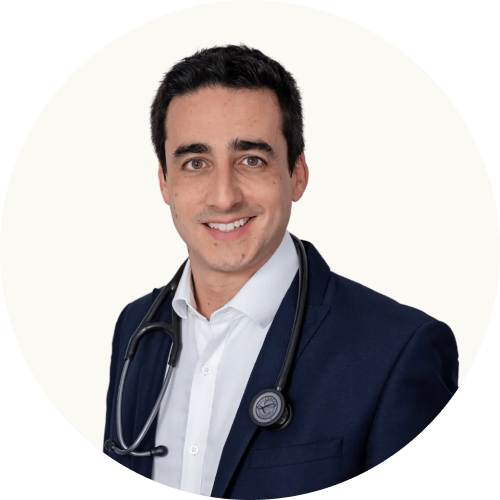
By Dr Daniel Gordon • 17, Jun 2025
You have cancer. Three words no one ever wants to hear — and yet, thousands hear them every day. For many, the initial shock is paralysing. But what happens after the diagnosis? How do you rebuild your sense of self, trust your body again, and move forward without letting fear dominate?
At DGA Health, we’re committed to real, human conversations that help people navigate life-changing health experiences. That’s why I invited Emma Levy to join me on The Health Perspective. Emma isn’t just a physiotherapist working with elite Team GB athletes — she’s also a breast cancer survivor, a motivational speaker, and the host of the award-nominated podcast When Life Gives You Lemons.
Our conversation was one of the most honest and moving I’ve had. What follows is a reflection on that dialogue — one I hope offers strength, insight, and practical support to anyone facing life after cancer.
“I Remember Two Things...”
Emma was just 36 when she was diagnosed with breast cancer.
“I remember the consultant saying, ‘This is fully treatable and fully curable.’ And I remember looking at my husband, thinking he was going to faint,” she told me. “Beyond that moment… I don’t really remember much.”
This is something I’ve witnessed in many of my own patients. That moment of diagnosis often becomes frozen in time — the body present, the mind struggling to catch up. What struck me most was not just Emma’s honesty, but the way she chose to respond.
My Conversation with Emma Levy
Emma’s story is not just about surviving cancer — it’s about living well after it. What struck me most in our conversation was the way she reframed her experience — not as something to recover from, but as something to grow through.
Her perspective on recovery is practical, compassionate, and refreshingly human. Whether she’s talking about guilt, movement, fear, or mindset, there’s a quiet wisdom in the way she lives. These reflections stayed with me:
She doesn’t ask “Why me?” — she asks, “What now?”
She doesn’t chase perfection — she embraces balance.
She doesn’t silently worry — she learns to sit with it.
And she doesn’t just survive — she finds new meaning and energy in helping others.
These aren’t just ideas — they’re strategies. Below, I’ve gathered the practices Emma lives by today, drawn from both her experience as a patient and her insight as a physiotherapist and speaker.
Emma Levy’s Best Health Strategies
When I asked Emma what helped her most during and after her breast cancer treatment, she didn’t list complex routines or wellness trends. Instead, her approach was human, grounded, and deeply personal. These are the strategies she continues to live by — not just to stay healthy, but to stay herself.
1. Prioritising Movement and Exercise
This is, without question, Emma’s core strategy. As a physiotherapist, she already understood the benefits of movement, but cancer gave it new meaning.
During chemotherapy, exercise became the one thing she could control. It gave her structure, identity, and emotional strength. She ran, swam, and stayed active not to prove anything, but simply to feel better.
“If exercise was a pill that reduced the risk of recurrence by 60%, everyone would take it,”
Her advice is simple: just move. That could mean walking around the block, stretching, gardening — anything that reconnects you to your body and lifts your mood.
2. Setting Daily Intentions
Pre-cancer, Emma was a long-term planner. But that changed. Now, she focuses on one day at a time — asking herself, What do I want to have achieved by the end of today?
This shift helps her feel more grounded and less overwhelmed by uncertainty. It’s a mindset that’s particularly helpful for anyone adjusting to life after treatment, where big-picture planning can sometimes feel daunting or fragile.
3. Practising Mindfulness Through Movement
Emma doesn’t meditate in the traditional sense, and she doesn’t feel the need to. Instead, she finds mindfulness in activity: long swims, solo runs, and being outside.
Swimming, in particular, puts her in a meditative state. It’s her time to pause, reflect, and let her thoughts settle. This kind of mindfulness — informal, embodied, and personal — is deeply effective. And it’s a reminder that there’s no one right way to practise presence.
4. Accepting — Not Fighting — Worry
Emma was very honest about the low-level worry that lingers after cancer. A new pain or cough still makes her wonder, Is it back?
Her oncologist gave her a helpful rule: wait two weeks. If the symptom persists, then investigate. That kind of structured reassurance helps her avoid spiralling into anxiety.
Importantly, Emma doesn’t try to eliminate worry — she accepts it. As she put it, “accept it… sit with it… and then you can move through it.” That psychological flexibility is something I often encourage in my own patients.
5. Trusting Her Medical Team Over Online Opinions
We discussed the overload of conflicting advice online, particularly around cancer recovery. Emma’s response is clear: she takes her questions directly to her oncologist.
Whether it’s about alcohol, supplements, or lifestyle changes, she seeks out evidence-based guidance from someone who knows her personally. That professional trust gives her peace — and protects her from the kind of fear that can be fuelled by endless Googling.
6. Seeking Mental Health Support When Needed
Emma worked with a trauma-specialist psychologist during her treatment. She described it as “super helpful” — a space where she could process things she didn’t even realise she was holding onto.
And she made a powerful point: why is it socially acceptable to talk about seeing a physiotherapist, but not a psychologist?
She no longer attends regular sessions, but knows she’d go back if needed. She’s also found therapeutic value in hosting her podcast, When Life Gives You Lemons — a space where difficult stories are shared, processed, and humanised.
7. Living with Balance — and Letting Go of Guilt
Emma has a clear approach: live well, live fully, but don’t aim for perfection. She’s proactive about her health — she exercises, eats well, sleeps well — but also enjoys the occasional glass of wine or an ice cream on holiday.
“We’re human,” she said. “And being human means living, not feeling bad about it.”
This kind of balance is crucial. It allows space for joy and ease, not just rules and restrictions. And for many people after cancer, that permission to simply enjoy life again is just as healing as any treatment.
Final Thoughts
Emma’s story is one of resilience — but also of honesty, balance, and deep self-awareness. She didn’t just recover physically; she built a new way of living that prioritises presence, movement, trust, and compassion for herself.
What I appreciate most is that none of her strategies are extreme. They’re not about rigid routines or perfection. They’re about staying connected to your body, mind, and the people you trust.
Whether you’re navigating life after cancer or supporting someone who is, I hope Emma’s experience offers both reassurance and practical guidance. Her message is simple, but powerful:
“Just move. And find something good for your mind.”
If this conversation resonated with you, I invite you to watch the full interview — or share it with someone who may need it.
Disclaimer
This blog post provides general information only. It is not intended to provide instruction and you should not rely on this information to determine a diagnosis, prognosis or course of treatment. It should not be used in place of a professional consultation with a doctor.
The medical information is the personal opinion of the stated author(s). It is based on available evidence or, where no published evidence is available, on current medical opinion and practice.
Every effort is taken to ensure that the information contained in this website is accurate and complete. However, accuracy cannot be guaranteed – rapid advances in medicine may cause information contained here to become outdated, invalid or subject to debate.
The author(s) is/are not responsible for the results of your decisions resulting from the use of the information, including, but not limited to, your choosing to seek or not to seek professional medical care, or from choosing or not choosing specific treatment based on the information.
You should not disregard the advice of your physician or other qualified healthcare provider because of any information you read on this website. If you have any health care questions, please consult a relevant medical practitioner.